
-
Lauren DiGiulio
-
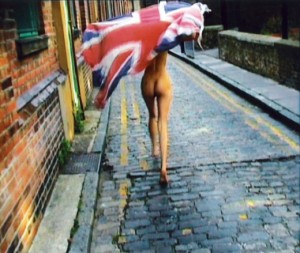
How Tracey Emin Conquered the World
by Lauren DiGiulio September 28, 2011
By inviting us to step uncomfortably close, Emin continues to question the nature of intimacy, and to explore the limits of the boundary between self and other.
-
Apologies, Concessions, and Wild Gander at BRIC Arts
by Lauren DiGiulio May 18, 2010
What happens when we confront certain unavoidable aspects of history? How does our relationship to the past impact the way we negotiate the complexities of trans-cultural identity? Two shows at BRIC Arts Media search for reconciliation among the shifting landscapes of compromise and cultural dislocation.
-
Police, Adjective at IFC
by Lauren DiGiulio February 9, 2010
Beneath the scene’s cutting irony lies a subtle investigation of language’s relationship to power. Here, law enforcement’s strict adherence to the letter of the law rehearses the reliance of authority on language as a source of power. We see power derived directly from linguistic definition, delimiting itself according to the dictionary’s prescriptive code. Accordingly, each police officer must be the definition of a law enforcement official, and each offense of the law must be treated precisely as such. If language can here be read as an allegory of state power, then the act of definition performs as a metaphor for the law, delineating rules about how this society uses words much the way that laws demarcate boundaries of human behavior.
-
Heiner Goebbels at Lincoln Center
by Lauren DiGiulio January 7, 2010
The installation is centered on a group of five pianos whose cabinets have been stripped away to expose their inner workings. Sound is produced by mechanical manipulation of the instruments in several ways; the automatic movement of keys on some resembles traditional player pianos, while the strings of others are plucked directly with a mechanical arm. One instrument consists solely of a grand piano’s soundboard, plate, and bass strings, which is tilted vertically and played with a device that strums along the length of the strings. Here, the copper coils that wrap around the steel core of the string are physically articulated, resulting in a low ratcheting sound that adds a distinct tension to the music.
-
Notes from Christmas Windows
by Lauren DiGiulio December 26, 2009
This fantasy aesthetic of glitter and decadence feels uncomfortably familiar. One wonders if we haven’t become so accustomed to work re-appropriating this particular ultrakitsch style (as in Koons, say, or Murakami) that we forget when we are viewing the real thing. If this is the case, then we have Debord’s image transition performed twice: first in the traditional sense, with commodity becoming image – which Bloomingdale’s reenacted so efficiently – and then a second time as the seemingly ubiquitous artistic parody of this process evaporates, itself, into image.
-
Hart and Drew at Light Industry
by Lauren DiGiulio November 24, 2009
The patterns and shapes that emerge from the activated powder are at once microcosmic and monumental. We feel as if we are looking at an ambiguous primordial image that could simultaneously represent the Big Bang, volcanic activity, or the frantic choreography of subatomic quarks. By allowing the sound of the projector to initiate, Hart and Drew celebrate the rude mechanics of the film’s instrumentation, and subvert the traditional hierarchy that places image before sound within its presentation.
-
Lilibeth Cuenca Rasmussen at Sculpture Center
by Lauren DiGiulio November 19, 2009
The performance consists of Rasmussen’s physical interpretation of seven poems, written by the early modernist poet Mina Loy, and by the artist herself. Loy’s words underscore the work with rich symbolic imagery, while Rasmussen’s sharper tone brightens and provokes. By bringing these distinct voices together in dialogue, Rasmussen celebrates the influence of Futurism on her work while using it as a point of reference to orient herself within the landscape of feminist performance.
-
Blood Drive at Zach Feuer
by Lauren DiGiulio September 16, 2009
Blood Drive, composed by Kate Levant and presented at the Zach Feuer Gallery, explores the layers of cultural symbolism behind the simple act of giving blood. Effective, if under-realized, the show celebrates the body as a primary active agent in producing useable biological material while gently investigating the limits of socialized connection within an individual-centered culture.
-
